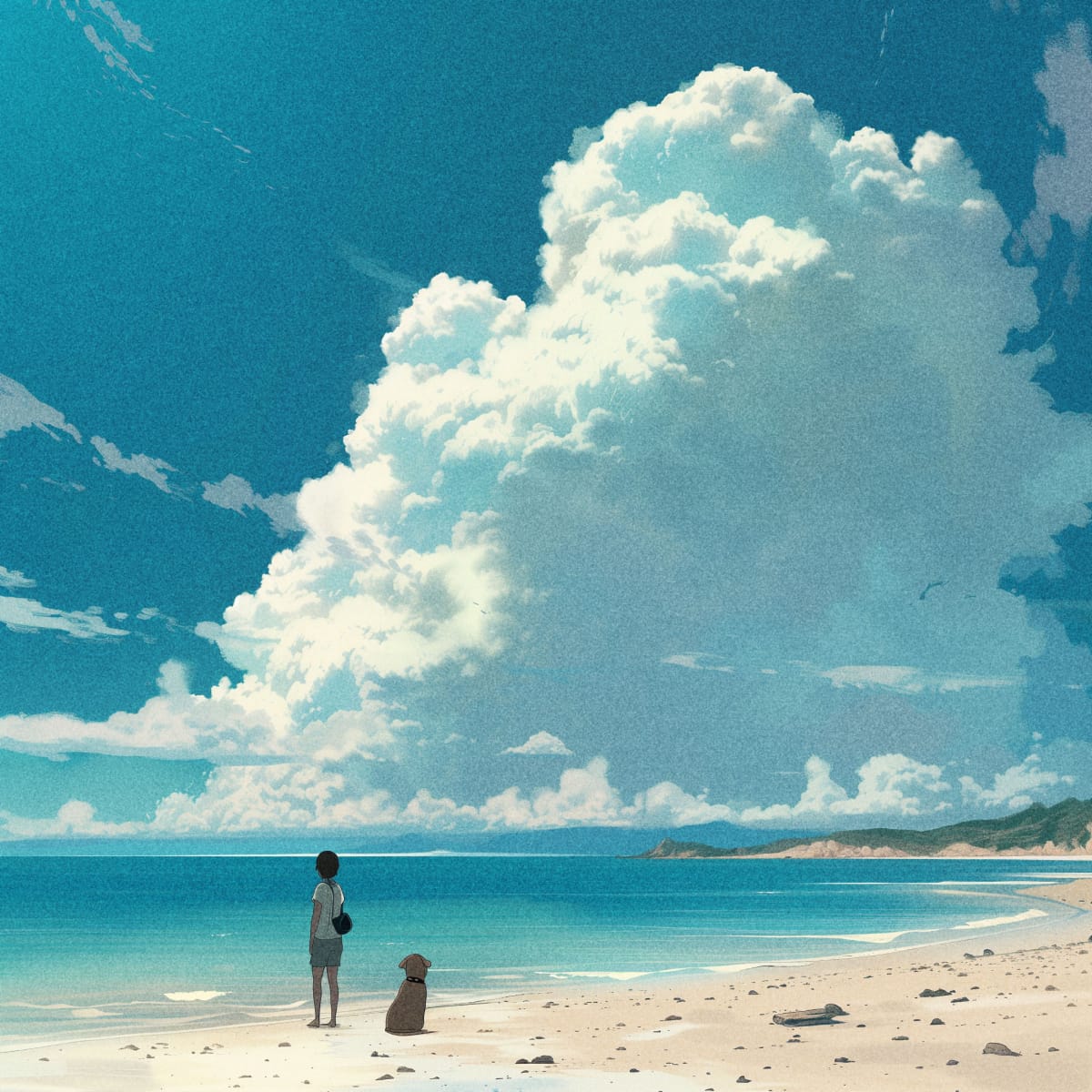

Not all will summit Everest.
I expounded upon the notion yesterday that many players are destined to bounce off of Silksong, if not before their arrival at the front steps of The Citadel, certainly in attempting to pass the gatekeeper known as “The Last Judge”, who acts as an all important skill check punctuating the end of Act 1, and arguably, a reality check for many who may yet not have confronted the cold hard truth: not every story has a happy ending.
Before waxing philosophical for a moment about the cruelties that permeate Silksong, I feel it proper to mention I am currently plagued by a bout of extraordinary exhaustion, one that I had to contend with yesterday, and the same sense of stilted struggle that still haunts me this soured day. This is not even the article I wanted to write mind you, but I do not feel adequate enough to do justice to that idea as I think it rightly deserves as of yet, though I feel adequately capable enough of summoning some temporal energy of sorts to will myself to bear creative fruit in spite of these pretensions.
I know that seems like an excessive moment of confession, but I needed some personal catharsis in clearing the air on what I see as an unfortunately but unavoidable dip in article quality the past several days, as they had the capability (under normal circumstances) to be farm more polished and more greatly executed than they ended up being. Burning the candle at both ends will betray one in such a fashion, however.
Digressing entirely back to the topic at hand, I think in attempting to grapple with the heart of the matter of Silksong, is understanding where the middle ground is in terms of the conversation centered around difficulty, and a more pressing point relevant to this notion, and that is whether or not a middle ground is even relevant in the first place. That might seem like a bizarre notion, and even some of my propositions from the recent past mix together in such a way that one may not know exactly where I stand on the matter, with so many perspectives running up against each other, so lets parse some truths here.
In an effort to attempt to curb some possibly gratuitous exposition on the matter, we are aware there is a “democratization of difficulty” at hand with Silksong, much like many other games, with players showcasing where there may be spikes of difficulty even harsher than initially intended by Team Cherry (TC), hence a patch that was recently released. With that said, and acknowledging that TC is willing to “play ball” and sand down some rough spots. Regardless of evening out these moments, there yet remains a reality where video games, beyond just the measurements of Silksong, are inherently meritocracies, and therefore, only those with the power to succeed will.
The irony here is, that per my death of the dev article, where single player experiences should not be sanitized outside of extreme defects akin to game breaking bugs, I do not agree with the democratization of difficulty, though I observe the relevancy it has to bear in the conversation between player and developer. I think referencing my point before about whether or not a middle ground is even relevant in the first place comes into play here.
What I mean by this is entirely related to one’s notion about their perspective on a video game. Whether or not someone believes certain things to be true, more so in the realm of whether a person looks at a game and sees merely a piece of art vs a consumer product, the video game does remain a consumer product through and through. It is within this framing we consider whether or not “it is fair” by a middle ground standard to include everyone within the means of being able to surmount difficulty or not.
Painting with broad strokes at the moment, I fully understand that, but it does bring to the forefront that while, on a technical, theoretical level, Everest can be summited by anyone, not everyone will summit Everest. I know for Silksong, we can look at it through the lens of it being a consumer product, and through that logic, one jumps to the conclusion “Team Cherry owes me X”, it is a dangerous entitlement to try to dissect. I have largely been trying to avoid addressing the players with issues involving Silksong, in belittling their skills or diminishing their cries of concern involving difficulty, but it does bring up the question of “If everything is made easy, does anything remain hard?” Which is why I cite my Everest comparison, as the idea behind the summiting is suppose to involve a select group of people, a very specific idea of a person who through a series of circumstances, was able to accomplish this goal. If it were so easy for everyone to do it, it would not be notable in the first place, and draining the content of the struggle would make the event eventless thusly.
I’m of course, really trying not to address specific concerns more or less, cause we could be here all day in terms of why X is too much, or why Y needs adjustment. This is why, overall, I put forth the notion of “What do you think Team Cherry owes you?” Cause maybe it boils down to the notion you regret purchasing Silksong due to the fact it is too difficult, and you have to confront the matter, whether through a lack of time, care, or ability, you are unable to accept that your inability to surmount the challenge the game represents. I think the irony here is that, due to Silksong being a consumer product, to my point from before, maybe people think that means they’re automatically entitled to see all of the content, with only the stark contrast in mind that, you have access to it, but you must prove yourself to see it.
This is ultimately an incredibly subjective source of contention, with no real right answer. As someone who has encountered struggle while playing Silksong, I didn’t stomp my feet saying to myself “this game should contort itself around to my standards”, I sat in my defeat, dwelled on what had occurred, and then realized I had to adjust my approach in order to surmount the challenge. Perhaps it was due to me confronting the loss with rationality, whereas so many others are too emotionally charged in their failures to regulate themselves in their response to losing in what they see as an unfairness, but at some point in this conversation, we do have to parse what is an entitlement, and what is just the garden variety bitching “built into the experience”, something one should expect to happen, and can even revel in as a contingent emotion relevant to the process at hand. Much like I have posited not all video games are made with the intent of fun in mind, some experiences have suffering kind of part and parcel as apart of the experience, and it is whether or not ones own tolerance levels are able to match that expectation, can we understand where the issue may lie.
This is ultimately, quite a difficult conversation to have, and I lament my lack of mental clarity at the moment to not be able to deep dive into it more effectively, but perhaps among the litany of thoughts I’ve provided herein, I may continue to effectively build upon them, in the coming days of continuing to consider Silksong’s standing within the community.
-Pashford
Leave a Reply