Remember folks: just because you feel like bucking the trend of traditionality, does not mean it will always work out for the best.

“wHy Is ThIs gAmE sO dIfFiCuLt?’ said every loud Metal Gear Solid player ever
As Expedition 33 (E33) continues to enrapture me, I soldier forward; its world full of dread and woe unrelenting in its pulverization of my senses, my travels continuing to expose me to an absolute glut of sorrow and despair, always lying in wait just over the horizon…
I mentioned awhile ago that games like E33 remind me of the benefits of being more heavily fixated on design deconstructionism, as doing a breakdown of a more narratively driven experience, especially one on the newer side, translates into an absolute nightmare, in considering how to go about discussing it, while also not spoiling it at the same time. However, and as mentioned, I do not regularly focus on story analysis when writing about games, so I needn’t worry about spoiling any of the nitty-gritty of E33, though I will comment on its extraordinary focus on darker subject matter, in being one of the games more admirable nobilities, and prompts me to want to write a piece involving a closer look at the games core themes, paralleled with the philosophical thought of Camus’ absurdism, though I think that’s a maybe later kind of thing.
Instead, I’m going to go the complete opposite route, and talk about a surprising light subject matter that, I guess when I stop to truly think about it, was a likely inevitability, what with E33’s relentless energy in carrying the burning flames of tradition that Final Fantasy ignited all those years ago, and that is a brief discussion about mini-games, in all of their totally goofy fucking glory.
I’m not sure how many minigames exist within the metaphysical boundaries of E33, as I am still working my way through the experience, but I know there are at least two types of minigames to speak of, and they hilariously underline the games limitations. I don’t mean that with any seriously gnarly sentiment of negatively harbored energy on the matter, as different types of games just have different types of feels, something I’ve talked about before in some articles referencing what I call “fingerfeel”, in all of it’s dubious sounding revelry.
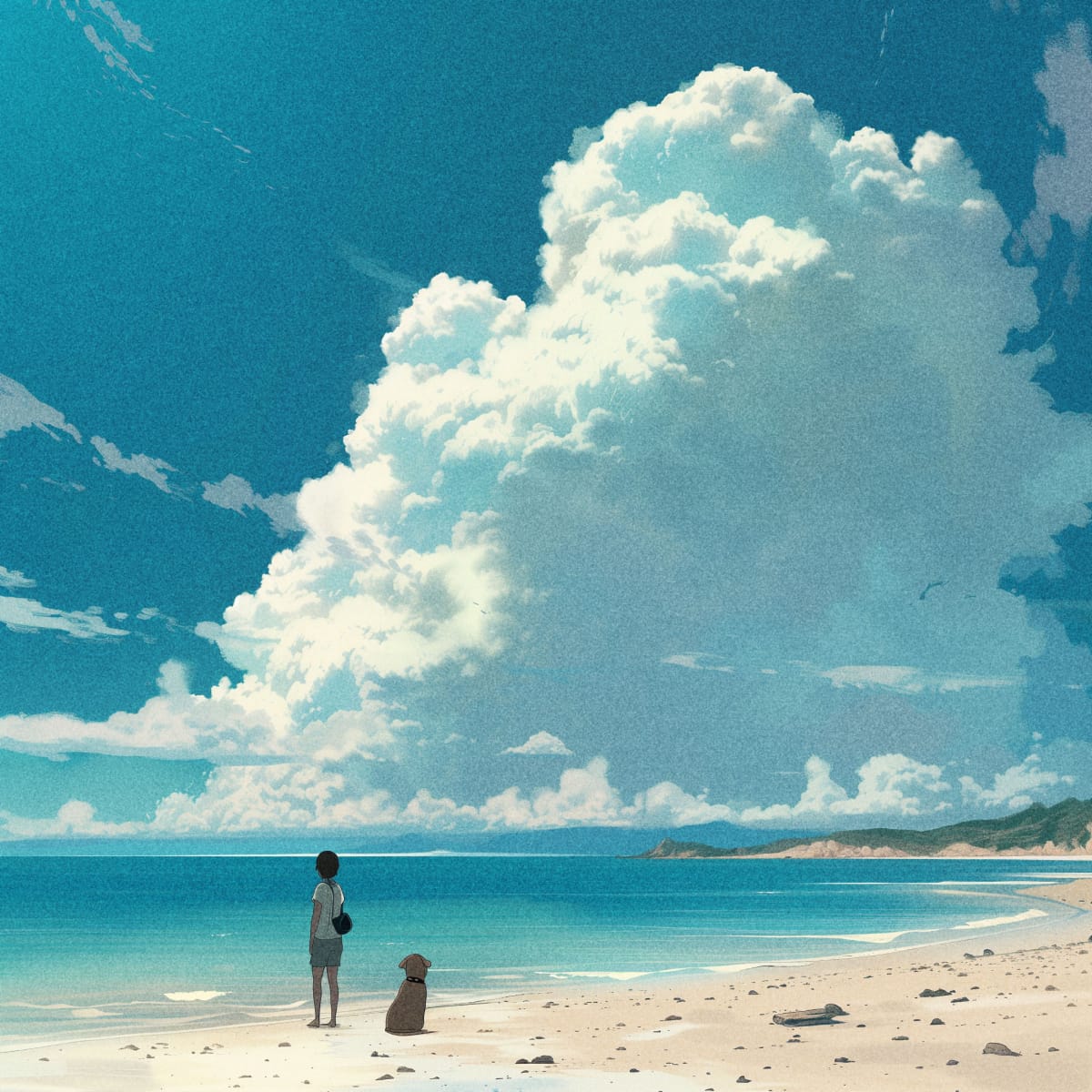
The first type of minigame, though I admit one may lawyer a defense against me, in being a little too “loosey-goosey” with definitions here, comes in the form of what is essentially an obstacle course, that takes the form of a mini-platformer crammed into your full length RPG. I suppose the reason I don’t mind slotting this sort of activity into the minigame category, is because it first becomes available on the overworld map, after you get out of the first major area, and is on an optional beach with wacky music, quirky unlockables, and a metagame of learning how to master an entirely different system of play outside the norm in a microsized portion of play. Ergo; a minigame.
I’m just going to short hand the thing by calling it the OC (obstacle course), so we may be more expeditious about out discussion of it. Now, I think it is worth mentioning that like most minigames in other much larger games, there is seemingly this unspoken rule amongst developers, that one has to grade on a different curve of quality, as rationally speaking, as no rational development team is going to go through the pains of time and effort to develop a whole other real deal video game…on top of already developing a video game as a commercial product/artistic endeavor, what have you. If they were going to spend that kind of resource doing it, the thing in question would just be another game onto itself, so that irony is always front and center with the idea of minigames in the spotlight. I think, to the point of grading on a curve, one is going to have to acknowledge the inherent “jank” in said minigame, as part of the whole point of minigames is to act as filler of sorts, so one doesn’t want the player to just blow through the thing all will-nilly like.
With that massive preface out of the way, we can quite appropriately segue directly into discussion of the OC, as janky filler is about the big and small of the endeavors inherent qualities. I’ve encountered other small platforming like sections in E33 thus far, but most have been rather sane navigations of terrain, that just add a bit of flavor to the overall exploratory standards of the title. Not having a jump button in a video game always feels quite bizarre to me, and once one has a jump button, one may as well experiment with some well needed verticality, in creating a more dynamic space for the players to freely roam in.
However, since the OC is limited by the jumping mechanic present in E33 (really more of a bunny hop), the whole course is more or less kind of a mad dash of horziontiality, as E33 not being a proper platformer, can’t really pull off regular platformer-like-manuevers, so we are mostly stuck witha sprint across what are “floating logs” above water, with some spinning platforms thrown in at the end. I chuckled to myself before the whole thing even began, as the reality of the situation had already instantly struck me, and I was just shaking my head wondering how much of a time sink this was going to represent.
I think the OC, in many ways, possesses the same overall “give” that E33 inherently has as an RPG with a parry system involved. That interlinking idea is just a fun coincidence, more so related to my notions of fingerfeeling I mentioned, as it’s one of those bizarre metaphysical flavors of gameplay that is more of a felt philosophy then “a way of life”, to put it in the most appropriately abstract way I can imagine. To that point, I think I’m going to be more generous than most other gamers will be, in referring to the overall quality of the OC, when I say I feel as if (at least course #1, assuming there will be more) is as follows: stern, but fair.
I think from the get, the OC, in not having a time limit of any variety associated with it, already helps to destroy a massive sense of tension that usually just drills into the average players brain like a rusty drill torture in some low budget torture porn film, cheaply grotesque in the mutilated standard of horror it helps to generate. On top of there not being a time limit, the OC is mercifully short, even by a standard of this being the first possible one (of many?), so I feel like the devs were really throwing a bone to players, (RPG players mind you), players who are otherwise not as dexterously adventurous as their other gaming colleagues may be, so things like a time limit or a ridiculous marathon-esque length would have been right out, for something that is arguably kind of towards the beginning of the game.
While the bone thrown to players in terms of a stern fairness of the OC, in not including a time limit nor any great length, is a milky one to speak of, the rest of the course still does speak to the “jank filler” I spoke of earlier, with every clumsy plummet off of one of the logs, giving way to inducing a long stream of sighs, each one heavier than the last, as one helplessly falls to the watery depths below.
I think, where a lot of players are likely to go wrong, is in trying to take the course too slowly, thinking that the turtles pace will win the day. I argue against the tactic, as the more prolonged sense of tension will create a greater psychological exhaustion for the player, and every unnerving fall will feel as if losing a lifetime in the process. Where as, if one starts out practicing the OC as a trial in speedrunning, bolting your way crookedly over the logs, one will find that there is more leeway amongst the jank than initially thought, and the practice runs will be quicker and more engaging as a result.
Outside of that big protip, in how to safely go about practicing the OC, other tips I could provide are similarly vague as a reference point. For example, I switched my character model to Lunes to do the run. Not because she has a different hit-box or “stickier feet” than I am aware of (she actually floats above the ground visually, but this in no way impacts her ability to fall off a ledge, in an ironic moment of character design violating gameplay mechanics), but there was something innately preferable visually speaking in using her. This weird psychosomatic approach helped grounding me in someway, and even if it was for some reason a placebo effect, if the perfunctory pill always provides better results, it ceases to be perfunctory, dammit.
Aside from that, you almost have to approach the OC “at an angle”, as your POV is at a diagonal with the rest of the course, so it is of great benefit to move in broader, straight lines, than messing about with any turning to speak of, keeping the camera behind you at all times. For those who have played shooters before, think of it in the same way you would, when lining up a shot for a target, by physically moving your character with a jump, so you are “hoisting your entire line of sight” to line up to said shot, instead of freely aiming as “intended”, if you catch my meaning.
I don’t remember needing to spend an awful lot of time to get to the end, as there is no last minute upset lying in wait, and as mentioned, the OC is short, and without time limit…to reiterate: stern, but fair. All you get as a reward are additional outfits, coming in the form of some swimsuits, resolidifying the totally tertiary nature of said side silliness it represents. Again, a massively flawed inclusion to the overall experience that is E33, but it is included on good faith, and is just suppose to represent a well needed break from all of the sorrow and insanity taking the form of seemingly infinite bloodshed that stains the world of Expedition 33.
Next time, we talk about “volleyball”…
-Pashford
Leave a Reply