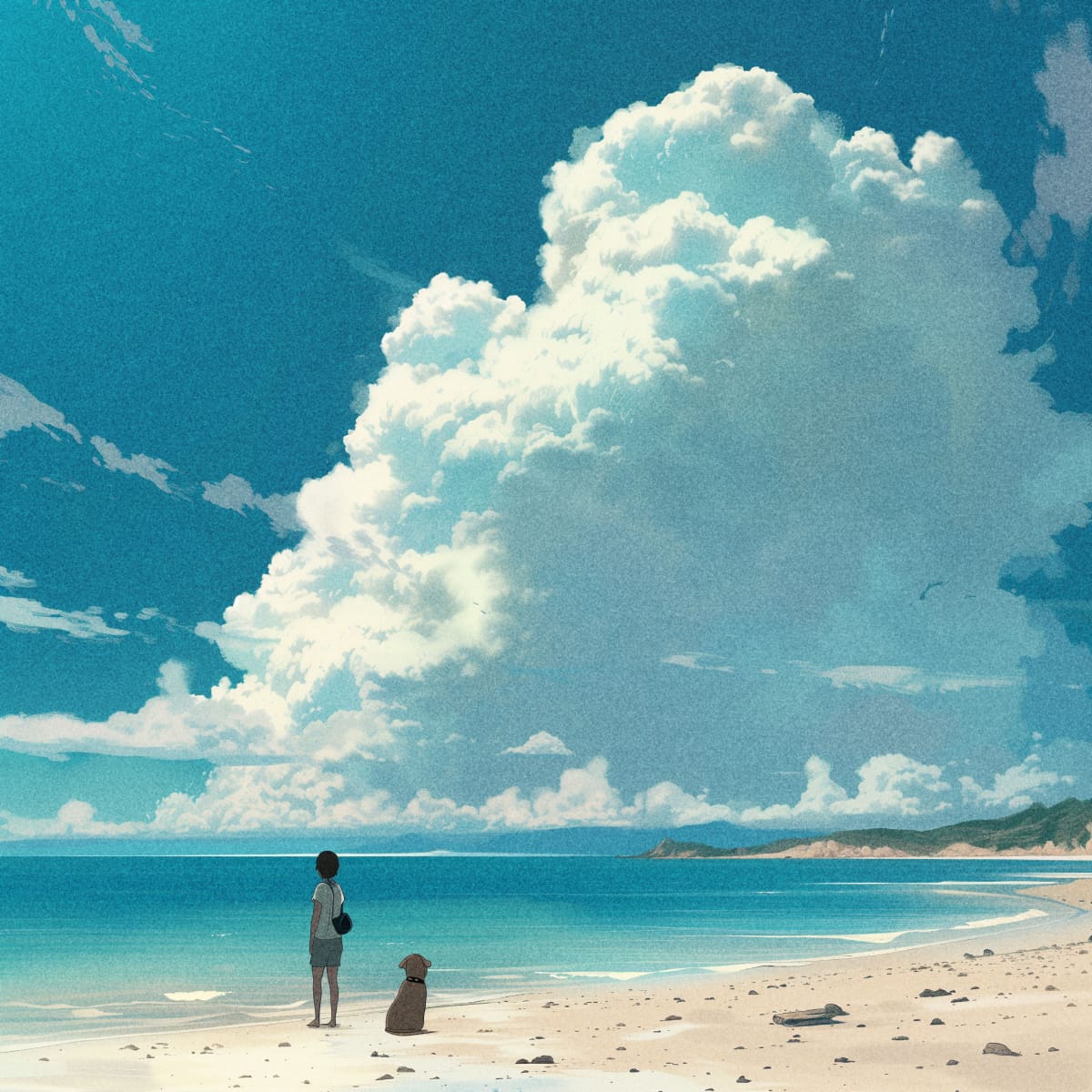
Not everything has to have a point, though that assertion might just be a chaotic musing that springs forth from the mind of a mad existentialist.

I mean, when shit like this exists (see above), you look me in the eyes and tell me life makes sense and or has some greater meaning behind it
Had to take a bit of a breather in terms of my regularly scheduled project at the moment, i.e. Mina The Hollower, and all of it’s radically absurd retro awesomeness, as I just didn’t have enough time to make any meaningful progress, so no need for any updated progress report on the matter. The good news/bad new dichotomy of playing a lot of games at any one moment is one is never bored, that’s the good news of course. The bad news is that if one has any sort of an obsessive streak or unrelenting focus on completionism intact, you will end up driving yourself absolutely fucking insane attempting to “make it all happen”, cause such naive ambition is a bold faced lie, and belaboring under such false pretense is no way to live at all. As I’ve said in the past, and will continue to say long into the future: one has time to do anything, but one does not have time to do everything.
Which, has randomly prompted me to try to play around with a little thought experiment related to player based accomplishment statistics and the probability relation to “unlocking potential”, which is an interesting prospect to me; the idea related to skill acquisition though time expenditure, and the variance amongst the population of folks who are relevant to the metrics of who can accomplish what, and whether or not you can see the exact same transformative process of skill progression, equidistant to time invested across all players. I mean, the knee jerk reaction is to say no, right? Not all players are created equal kind of thing?
To put it another way, and this might seem like an arbitrary choice, but I think due to the games background, it makes sense to go with something so universal. If you take something like the original Super Mario Brothers (SMB), and picked ten random players, and had them all spend 8 hours playing the game, obviously you would have varying levels of progress across the spectrum of said folk, as some may have more experience with platformers, maybe some just have more familiarity with games in general, others don’t excel in the realm of hand eye coordination, etc. After that 8 hours was done, maybe you’d only have 1 player who beat the game, with the other 9 all being at separate points on their journey of completion; someone got stuck on the hammer bros in 8-3, another player is having trouble with a tricky jump in world 6, maybe one of the others is just absolutely dog shit at dealing with Lakitu, so they’re still only at the half way point etc. This is unintentionally reminding me of how amazing Super Mario 35 was, which was a limited time game “battle royale” style vs version of SMB, where you tried to outlast the other players…so good. Then those cowards Nintendo delisted and it is no longer playable, cause obviously, Nintendo hates money and loathes, being the complete bastards they are…butI digress though.
I guess the point I was trying to arrive at is something along the lines of: is everyone capable of beating the original SMB, or is there always going to be some level of skill aggregation that dictates some will never be able to complete the game? Cause I’m inclined to believe that skill mostly boils down to time spent practicing, meaning as long as someone doesn’t mind the investment cost, they will inevitably see results, so wouldn’t it just boil down to whether or not someone cares enough to try? Or is there something inherent, whether it be through nature or nature, that dictates only a certain number of people will ever succeed within this standard, and this goes for everyone across any hobby/activity/pursuit etc.
As much as I would like to pretend some games are so demanding, only the “best of the best” are capable of seeing the end, but ultimately, a developers job is to essentially challenge the player throughout the experience, but still make it reasonably possible to have the player reach the end. I want to say it was one of the Halo devs (maybe, its hard to recall a quote from so long ago) that said making enemy combatants in video games in kind of a paradox, cause you are trying to make someone who is essentially really good at dying in interesting ways. In a sense: you are creating an entity who’s sole purpose is to ideally fail in a fun way (big paraphrase, of course) so it’s almost this weird tug of war, where you have a ticking time bomb of a shelf life, and one is just trying to find the sweet spot of when the poor bastard finally goes kaboom.
Obviously, you can extrapolate this to game design in general, and looking at any given SMB level, you look from beginning to end, and you count the number of “problems” a player needs to surmount on any given stage, and it puts things into perspective, as you may count less than a dozen genuine moments of “tension” in a single level, boiling the whole thing down to, in a ridiculously reductionist sense, 12 button presses in order to win. Which, when you phrase it that way, shouldn’t everyone be able to eventually get the gist of such a rudimentary system, in which to finally topple the entire experience in a moment of triumphant? Cause maybe it’s not really the “skill” portion of this that is the make it or break it of the entire litmus test/dividing line of what makes or breaks the player, in terms of who beats it and who doesn’t, but more a matter of something closer to who has the most patience? Which individuals have the right “value system” intact, to find this goal to be worthy of the energy that would go into it to making it to the end of the game?
This could be a case of me looking at this from the wrong angle, as in, it’s not necessarily about the notion that everyone of course, has a chance of beating SMB, it’s more of the probability of success an individual has in eventually accomplishing the goal. I’m almost inclined to say that carrying this out in real life would be quite the fascination, in terms of getting a totally inept or extremely out of their depth gamer, introduce them to Super Mario Bros, and track just how long it would take them to eventually beat it. Or looking at it from a different angle, looking at the individuals who have beaten the game, and doing profiles of those individuals, to see what common personality traits they possess, to see ff their are overall indicators one would have that would suggest a higher probability of success in such a regard.
I didn’t think that this thought experiment was necessarily going to lead me to anything conclusive this day, but it has my interest peaked, in starting a larger thought process in my own mind, about player potential, and underlying traits of player bases at large. I’ll keep pondering about it, m and maybe if we are lucky, it will lead to even greater ideas with which to generate more interest with.
till then…
-Pashford

Leave a Reply