
Historical perspective is a hell of a wake up call, and it’s astonishing when one looks back, and realizes how some things that seemed so common place one minute were simply gone within a cosmic blink of an eye the next.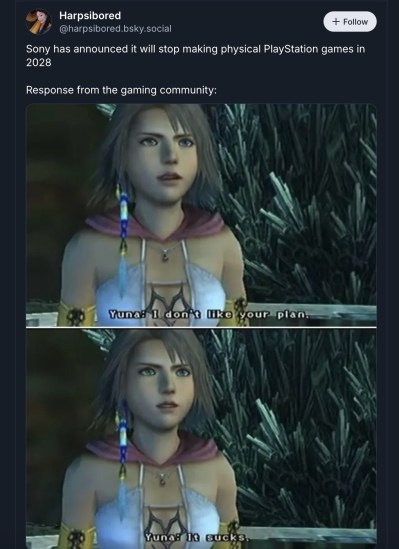
The future is non-ownable, it turns out.
One of those awkward days where I don’t have a lot of time to spare, which always leaves me in a bit of a situation, in having to dig deep to find a topic of conversation of interest involving my go to game at the moment. I’ve talked at length about Mina the Hollower, and I think I’m nearing the soft ending of the game, so the wrap up is likely not far away, so let’s see what concepts we haven’t discussed enough thus far, or merely return and reflect on some we’ve already touched upon.
I know I usually bang on a lot about hardship here on ATE, but I think this is due to the notion that challenge, how the player tackles it, and how the overall zeitgeist is contending with the whole idea of how hard a game is to master, tends to take a lot of precedence in gaming on a regular basis. I want to say it is a top three talking point for any single experience, with only money and cultural significance taking precedence in terms of priority. Which makes sense, as one has to be able to even pay the cost of entry to even be apart of the conversation, and right there, you will have a ton of outcry from people centered around price before the game even drops that will generate ire; look no further than our current gaming landscape, with conversations that GTA VI will help set the standard for game pricing moving forward, with its two price points on offer of $80 or $100, depending on which version you buy. Or the other big convo at the moment, that next gen consoles are likely to chase the example of the Steam Machine, and follow suit as $1000 investments, due to how both tariffs recently affected hardware price points, but also how the continually, ongoing threat of AI propagation has affected hardware shortages for the foreseeable future, and thusly the industry at large, and money becomes an obvious point of interest in terms of conversational material.
Not every game tends to be culturally significant, of course, and I don’t think it’s realistic to think every game can be, but I’d imagine for a lot of reasons, any dev team would likely be pretty psyched if their game ended up being a talking point at any sort of scale, as it would come with a sense of importance and accomplishment, in creating something that matters. You have some games that are “of the moment” kinds of culturally relevant, Among Us is a great example, though I suppose you could slot a lot of Covid related or pandemic era video games in here, and it would work across the board. Interestingly enough, two games that did find cultural significance during the pandemic, had already previously acquired it, so this was just another notch in their belt of popularity, and the two titles I speak of are Doom and Animal Crossing.
I think their mention dovetails nicely into two other levels of significance a game can achieve, and that is within the medium, and beyond the medium. Something like Animal Crossing was a known known before the pandemic, and was a big franchise for Nintendo for several console generations. I think the only reasons AC seems in anyway understated within the realm of Nintendo, is due to how high the bar is, when it comes to massively successful IP’s the company owns. With heavyweights like Zelda, Pokemon, and Mario, just to name a few of the several that have such ridiculous social capital, doing what AC has done is still an admirable accomplishment.
Games that achieve Tier 3 levels of fame, that being beyond the medium, ironically does continue to service Nintendo quite a bit, as they just have an excellent blend of creative, mathematic, and promotional idea people that know how to truly nail every aspect of content, in order for it to reach crazy heights. I will double back, however, and cite something like Doom as another example of something that goes beyond the medium, as the game came about during the budding era of when the general population was really starting to take notice of personal computers, at a time in the 90’s where affordability met functionality in just the right place, and was about to segue right into the advent of common internet usage, come the mid to late 90s.
Combine that with essentially perfecting an entire genre, the first person shooter, and thusly setting the stage for the genres relevancy for decades to come, pushing the standards for what the medium could do technologically speaking, with Doom’s “faux 3D’ in the form of the “raycasting” used to give Doom its look, which inspired any number of devs to push technology even further, and also be an early example of how “free to play” could work in the form of shareware, and there really is no end to the positive good that helped to push Doom into being known beyond the medium.
The modding scene that ended up exploding as a result of Doom is worth a mention in terms of innovative relevancy, but I feel like that is an entirely different article all on its own, if we were to go into any greater depth of detail beyond the mere mention of it.
I’m a big fan of spectrums, and with good reason. I think most aspects of life fall along a spectrum, and even spectrums within those spectrums; it’s spectrums all the way down, really, and I bring them up again now, as I think how a game places within its own tier of relevancy, can likely vary, due to how popular or topical a game is at any given moment. So for example, you’d think I’d mention something like Fortnite instead of Doom for a shooter that is beyond its medium, though ironically, even though Fornite is no doubt more popular, I don’t know if the game has really accomplished much, outside of understanding how to transform a game into a marketing machine, which is more how I see Fortnite: a living, breathing, ever evolving advertising platform. So there might be something to be said of that level of ingenuity within the realm of marketing, but I think that might get into other territory entirely. Truly, no disrespect to Fortnite, I just think that the consideration of its own bizarre evolution of growth, led me into an even greater realm of thinking within a even bigger topic of relevancy that I hadn’t and wasn’t even ready to fully confront yet.
I think there may yet be a fourth tier of gaming relevancy, that being “Beyond its Time”, which would mark a game as having historical significance, in terms of lasting impact, though we may still be too early in the mediums age to rightly judge a singular title as having such importance, and may have to wait till gaming reaches its 100th birthday in the later half of the 21st century to make an accurate judgement on that. I think as of now, one of the only speculative guesses I could venture without any hesitation whatsoever, at least in terms of where a franchise is considered, and not a singular game mind you, is Mario (as an entity), though what else may have such ridiculous lasting power beyond that will definitely be a “time will tell moment”.
This is definitely not the article I meant to write, but it’s the article we ended up getting, so cheers to happy accidents.
~Pashford
The Video Games That Will Outlast You
Discover more from Active Time Event
Subscribe to get the latest posts sent to your email.

Leave a Reply